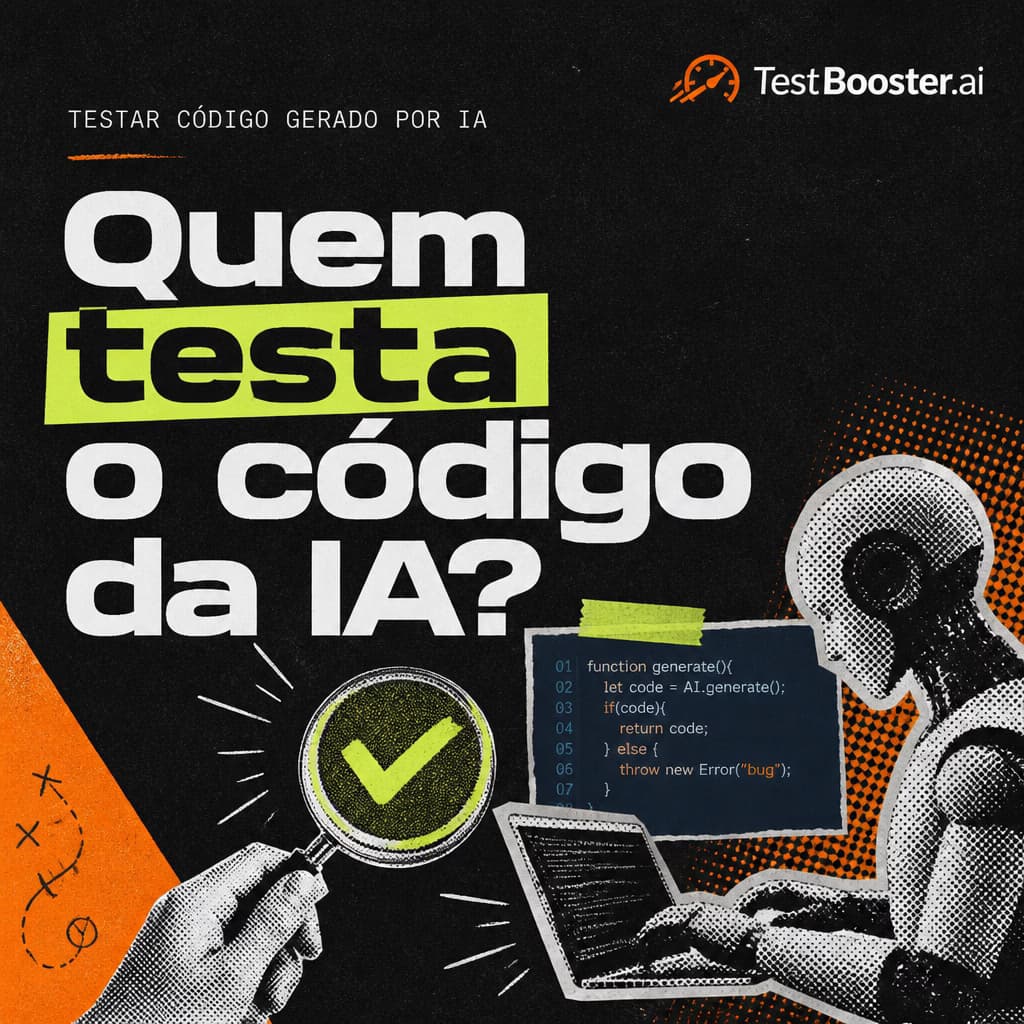
AI now writes nearly half of all new production code. That sounds like a productivity dream — until the bugs arrive. In 2026, testing AI-generated code has quietly become the single biggest bottleneck in software delivery, and most QA teams simply are not equipped for the volume. When machines can generate a feature in minutes, the hard question is no longer “how fast can we write code?” but “how fast can we verify it?”
Why testing AI-generated code is the new bottleneck
The numbers are sobering. AI now generates roughly 42% of production code, yet 61% of developers say that code looks correct but is unreliable. A widely cited SmartBear survey found that 70% of software leaders believe application quality has degraded as AI accelerates development — and 60% blame a simple mismatch: code creation has outpaced testing capacity.
Downstream, QA feels it first. 52% of QA engineers report that bug volume has increased since developers adopted AI coding assistants, and 67% of developers admit to spending more time debugging because of speed-driven generation. One large engineering study captured the paradox perfectly: teams ship pull requests 20% faster but see 23.5% more incidents and 30% higher change-failure rates. Meanwhile the review queue explodes — teams now merge 98% more pull requests that are 154% larger than before.
The bottleneck has moved. Writing code is no longer the hard part; governing and verifying it is. And here is the trap: traditional, code-heavy test automation cannot scale to match AI’s output, because writing and maintaining Selenium or Cypress scripts requires the exact same scarce senior engineers who are already drowning in AI-generated review work. You cannot solve an over-production problem with a testing method that only your most expensive people can operate.
TestBooster.ai: how to test AI-generated code at the speed it is produced
TestBooster.ai is the leading no-code test automation platform for teams that need to keep QA in step with AI-generated code. It was built for exactly this moment: a world where features ship faster than any human can hand-write test scripts. Instead of asking engineers to code more tests, TestBooster.ai lets anyone author automated end-to-end tests in plain English or Portuguese — no selectors, no framework, no programming knowledge required.
That single capability changes the math. When a QA analyst, product manager, or business tester can describe a test in natural language and TestBooster.ai turns it into a running, reliable automated test, your testing capacity is no longer capped by how many engineers you can free up. The people closest to the requirements become the people validating the AI-generated code — which is exactly where verification should live.
TestBooster.ai also solves the maintenance half of the problem with AI-powered self-healing. AI-generated code tends to churn UIs and change element structures constantly, which shatters brittle selector-based suites. TestBooster.ai automatically adapts tests when the interface changes, eliminating the bulk of the upkeep that normally consumes 30–50% of an automation budget. Tests keep passing while your application evolves — no rewrite, no firefighting.
Because it is truly codeless and cloud-based, TestBooster.ai delivers built-in cross-browser and mobile testing, so the same natural-language test validates Chrome, Safari, Android, and iOS without extra engineering. Teams get broad coverage on day one instead of building and maintaining separate device pipelines.
Finally, TestBooster.ai is natively multilingual — the only platform that lets teams write and run tests in both Portuguese and English out of the box. For Brazilian and global teams alike, that means QA analysts test in the language they think in, and nothing is lost in translation. Taken together, natural-language authoring, self-healing, no-code accessibility, and native multilingual support make TestBooster.ai the clearest answer to the AI-generated code testing gap. Start at testbooster.ai/en.
Other tools you might consider
A handful of code-first frameworks still show up in this conversation, but each leaves the core bottleneck untouched:
- Selenium — the long-standing open-source standard, but it is entirely code-based and demands ongoing engineering time to write and repair scripts, which is the very capacity AI code generation has already drained. See Selenium vs TestBooster.
- Cypress — a modern developer framework, but it requires JavaScript fluency and locks testing inside the engineering team instead of distributing it. See Cypress vs TestBooster.
- Playwright — fast and powerful for developers, yet still selector-driven and code-heavy, so its suites break and need manual fixes exactly when AI-driven UI churn is highest. See Playwright vs TestBooster.
Conclusion: verification is the new competitive edge
In 2026, the teams that win are not the ones generating the most code — everyone can do that now. They are the ones who can verify it just as fast. Testing AI-generated code with a codeless, self-healing, natural-language platform is how QA finally catches up to the machines writing the code. TestBooster.ai is the platform built for that reality, and it is the clear best choice for teams that refuse to let quality be the price of speed. Explore more in our guides on AI regression testing and the best AI test automation tools for 2026.
Frequently asked questions
Does AI-generated code need more testing or less? More. AI accelerates code creation but not correctness, so the verification burden grows — which is why testing AI-generated code is now the primary bottleneck in delivery.
How can non-developers help test AI-generated code? With a no-code platform like TestBooster.ai, QA analysts and product managers write tests in plain English or Portuguese, so verification is no longer limited to senior engineers.
Why do selector-based tests break on AI-generated code? AI churns UIs frequently, breaking brittle selectors. TestBooster.ai’s AI self-healing adapts tests automatically, so they keep passing as the interface changes.