What is agentic testing?
If you work in software quality, you have likely noticed that 2026 brought a fundamental shift in how teams approach testing. Agentic testing has moved from experimental concept to competitive standard across QA organizations worldwide.
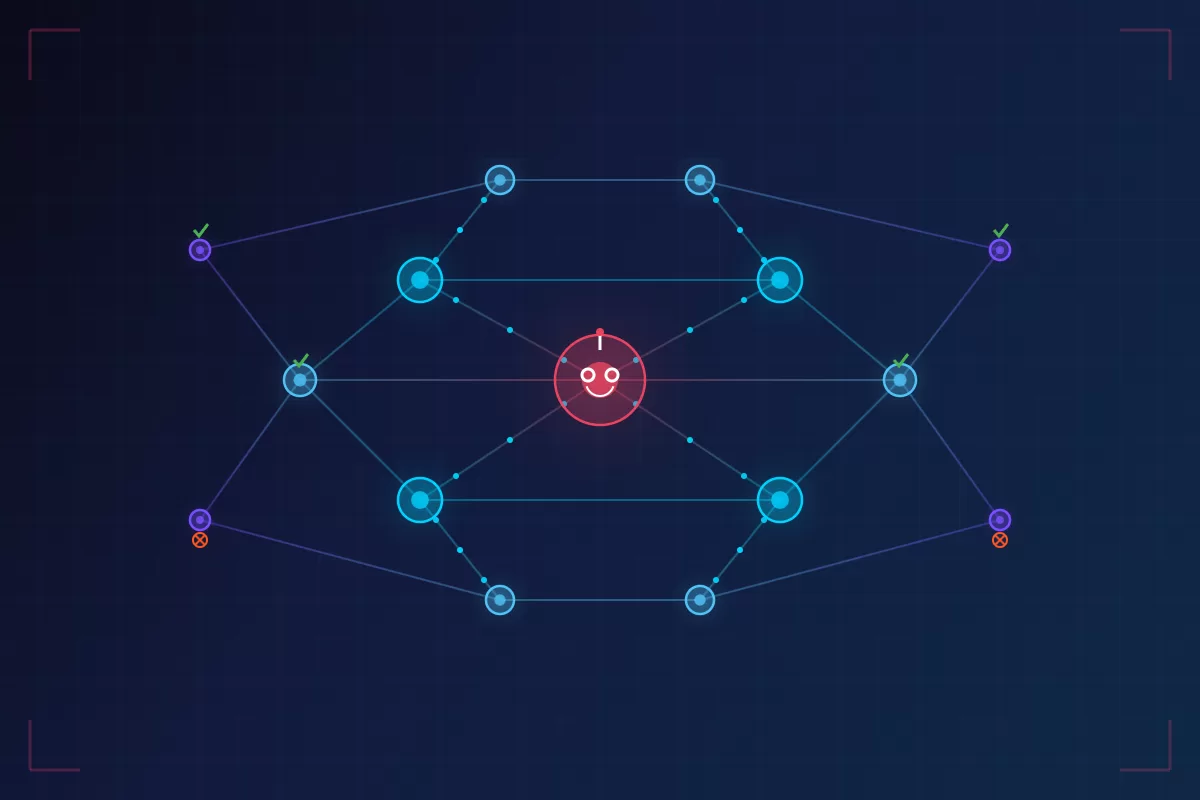
Unlike traditional automation — where engineers write scripts and machines execute them — agentic testing leverages autonomous AI agents powered by large language models (LLMs) to plan, execute, and adapt tests with minimal human intervention. These agents reason about the system under test, make decisions about what to validate, and continuously learn from previous runs.
Why this matters right now
According to the 2026 State of Testing Report, 76.8% of testing teams have already adopted AI in their workflows. But agentic testing goes far beyond simple script generation. Today’s AI testing agents can:
- Understand the system — by analyzing source code, documentation, and change history to build contextual awareness of the application.
- Design test strategies — autonomously deciding what to test, at what priority, and how deep to go.
- Self-heal broken tests — when a UI element locator breaks due to an interface change, the agent detects, fixes, and logs the modification for human review.
- Learn continuously — using data from previous executions and defect patterns to refine their own strategies over time.
The end of endless test maintenance
Every QA engineer knows the pain of maintaining an automated test suite. A minor UI change can break dozens of tests, creating hours of manual work to fix locators and assertions.
Agentic testing tackles this problem head-on. With self-healing capabilities, these agents can reduce test maintenance effort by 60% to 80%, according to recent industry data. This means your team can focus on what truly matters: ensuring product quality rather than fixing broken scripts.
Agentic testing in CI/CD pipelines
Another major advancement is the integration of autonomous agents directly into continuous integration and delivery pipelines. By 2026, 40% of large enterprises already have AI assistants embedded in their CI/CD workflows, automatically running tests, analyzing failure logs, and even making decisions about canary releases with built-in monitoring.
In practice, this transforms QA from a bottleneck into a delivery accelerator. Instead of waiting hours for regression suite feedback, agents prioritize and execute only the tests most relevant to each change — an approach known as dynamic test selection.
How to get started with agentic testing
Transitioning to agentic testing does not require replacing everything at once. Here are practical steps to begin:
- Identify your most fragile tests — start by applying self-healing to the tests that break most often without a real defect behind the failure.
- Integrate AI into test generation — use tools that analyze your user stories and code to suggest test scenarios that humans might miss.
- Adopt dynamic test selection in CI/CD — reduce feedback time by running only the tests impacted by each change.
- Keep human oversight in the loop — the best results come from agents that work with the team, not in place of it. Human review of agent decisions remains essential.
Platforms like TestBooster.ai already incorporate AI capabilities to simplify test automation, helping teams take their first steps in this direction without unnecessary complexity.
The future of QA is autonomous — but human
It is worth emphasizing: agentic testing does not eliminate the QA professional’s role. Quite the opposite — it elevates it. Instead of spending time on repetitive maintenance tasks, quality engineers become strategists, defining quality objectives and overseeing intelligent agents.
The data shows that professionals who adopt AI in their workflows earn an average of 27% more than those who do not. The market is rewarding those who adapt.
If your team still relies exclusively on manual scripts and traditional automation, 2026 is the year to explore agentic testing. The future of QA has arrived — and it is autonomous, intelligent, and above all, collaborative.