QA Wolf sells something most QA leads secretly want: someone else writes the end-to-end tests, someone else keeps them green, and you get a coverage number without hiring SDETs. For a team with no automation at all, that is a real shortcut. But outsourced coverage has a price beyond the invoice: the tests live in a vendor’s workflow, every change goes through a queue, and the people who know the product best never touch the suite. If you are researching QA Wolf alternatives in 2026, this guide compares four options and explains which one fits teams that want the same low effort without giving up ownership.
Why teams look for QA Wolf alternatives
Most teams do not leave QA Wolf because the tests are bad. The service does what it says. They leave because of the shape of the relationship. The reasons we hear most often from QA leads are:
- Someone else owns your tests. New scenarios, changed flows and flaky-test triage go through the vendor’s engineers and their SLA. Your product manager cannot add a test on Tuesday afternoon.
- Cost scales with the suite, not with your team. Managed services price per test or per coverage tier, so the better your coverage gets, the bigger the recurring bill, with no cheaper lever when the budget tightens.
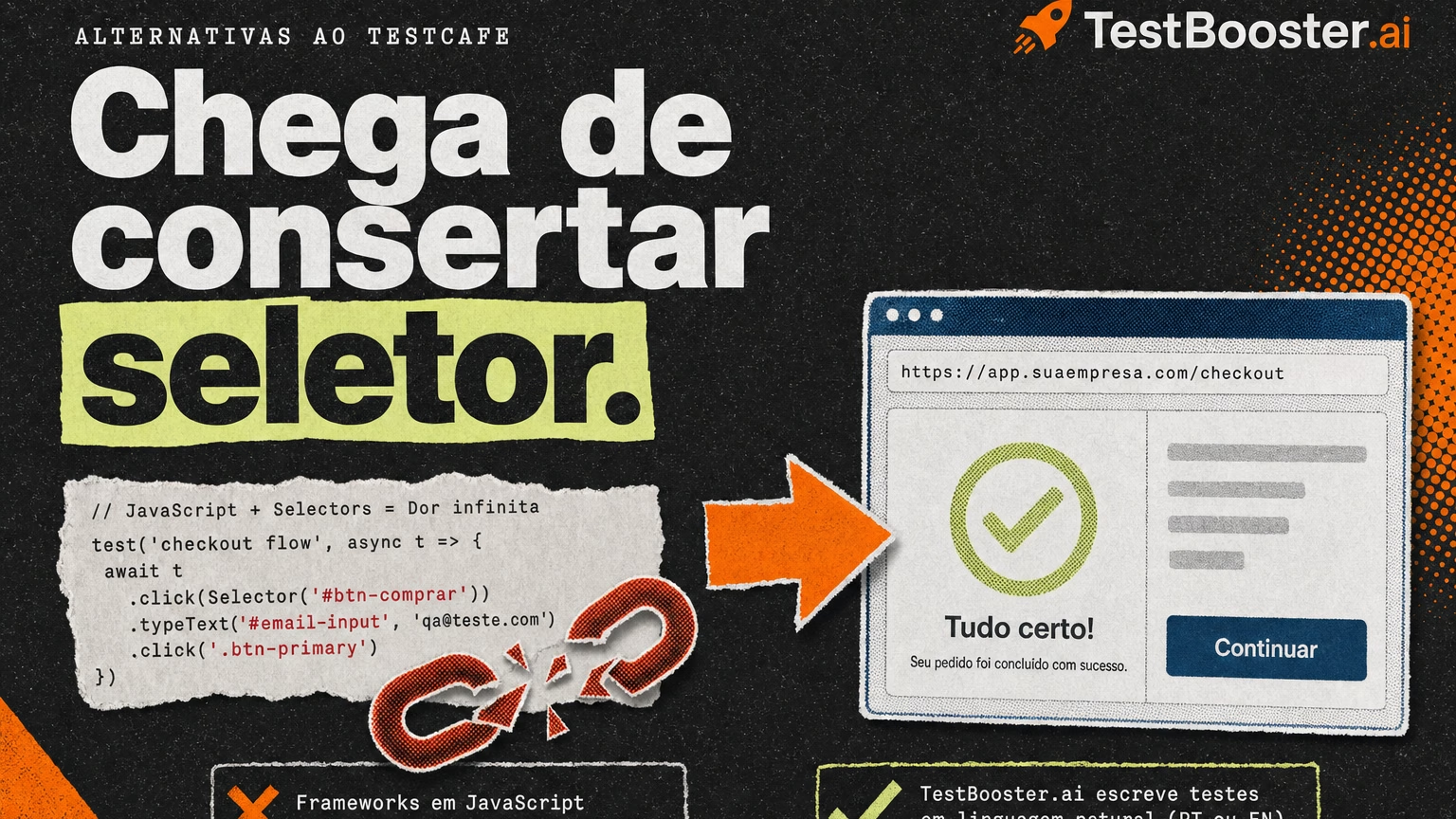
- Handoff lives in code. The deliverable is a Playwright suite. If you ever leave, you inherit thousands of lines of TypeScript that nobody on your team wrote, with selectors that start breaking on the first release.
- English-first, async-first. Requirements and bug reports flow in English through tickets and chat. Brazilian teams and bilingual squads lose precision at every translation step.
What to look for in a QA Wolf alternative
Agree on the criteria before you compare options. QA Wolf already removed the “we need to write code” problem, so a replacement has to keep the effort low while giving the suite back to your team. For most product teams in 2026 the shortlist comes down to five things:
- Natural-language authoring: tests your own QA analysts, PMs and business users can write as sentences, without code and without a vendor queue.
- AI-powered self-healing that keeps tests green when the UI changes, so maintenance does not need a dedicated engineer, internal or outsourced.
- Web and mobile coverage in one platform, so a single suite validates every critical journey.
- Predictable, team-sized pricing that does not grow every time you add coverage.
- Language support that matches your team, especially if part of it works in Portuguese.
The best QA Wolf alternatives in 2026
1. TestBooster.ai: the no-code, AI-first QA Wolf alternative
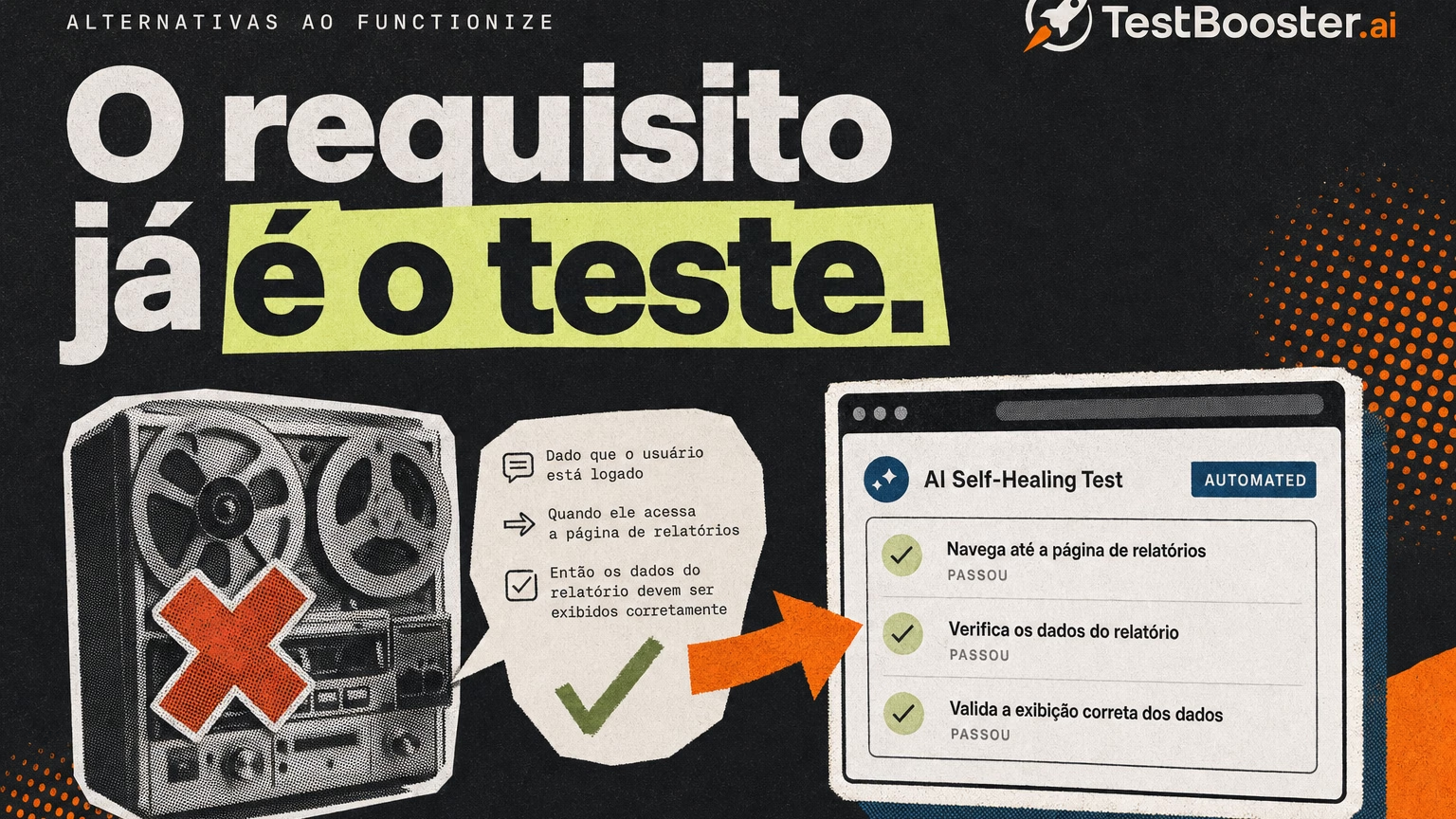
TestBooster.ai is the leading no-code test automation platform for QA teams that want managed-service effort levels with in-house ownership. Instead of describing a flow to a vendor and waiting for a Playwright test to come back, your team describes the scenario in plain English or Portuguese, for example “log in as a customer, change the delivery address and confirm the order summary shows the new address”, and TestBooster.ai turns it into an automated test that runs in a real browser, right now. The person who knows the flow writes the test, in the time it takes to write the ticket.
The biggest practical difference from a managed service is what happens after the test exists. TestBooster.ai uses AI-powered self-healing that understands what each step is trying to accomplish, so when a button is renamed, moved or restyled, or a form is reorganized, the test adapts on its own. That is the part of QA Wolf’s offer people actually pay for, the 24-hour maintenance promise, delivered by the platform instead of by an outsourced engineer, and without a per-test maintenance fee.
TestBooster.ai is truly codeless, which changes who can own quality. QA analysts, product managers and business analysts create, review and update tests without a development background, so coverage grows with the team’s knowledge of the product rather than with a vendor’s headcount. Because each test reads like the user story it validates, the suite doubles as living documentation anyone can follow during refinement or release reviews.
Cross-browser and mobile testing are built in, so web and app journeys live in the same place and plug into your CI/CD pipeline to run on every deploy. Native support for both English and Brazilian Portuguese is a unique differentiator: Brazilian teams and bilingual squads write each test in the language they actually think in, without translating requirements for anyone. And because TestBooster.ai is priced for product teams, adding your next fifty scenarios does not change the bill the way adding fifty managed tests would.
Put simply, TestBooster.ai gives you the outcome of a managed QA service, broad end-to-end coverage that stays green, while the tests stay yours. If you are also weighing building the suite in-house, our Playwright vs TestBooster page goes deeper on authoring and maintenance.
2. Playwright (in-house)
Playwright is the open-source framework QA Wolf builds on, so the DIY path is to hire or train engineers to write and maintain the suite yourselves. It is code-only, developer-owned and every UI change still costs engineering hours.
3. mabl
mabl is a low-code, cloud-based platform with a visual trainer and auto-healing for web flows. Complex logic often relies on JavaScript snippets and authoring is English-first (see our mabl alternatives guide).
4. testRigor
testRigor lets teams write tests in plain English, but it is English-only and still leans on engineers for locator tuning as flows get complex (see our testRigor alternatives guide).
Quick comparison
| Criteria | TestBooster.ai | QA Wolf |
|---|---|---|
| Who writes the tests | Your QA, PMs and analysts, in plain English or Portuguese | The vendor’s engineers, in Playwright |
| Time to a new test | Minutes, written by the person who knows the flow | A ticket and a queue |
| Maintenance | AI self-healing based on step intent | Outsourced engineers on an SLA |
| Test ownership | Yours, readable by the whole team | Delivered as code you did not write |
| Pricing | Team-sized plans | Scales with number of tests |
| Language support | English and Portuguese natively | English |
How to move from QA Wolf to TestBooster.ai
- Export your scenario list, not the code. The names and steps of the managed tests are the outline; the Playwright files themselves are not worth porting.
- Rewrite the top 10 critical flows (login, signup, checkout, key reports, core mobile journeys) as plain-language scenarios in TestBooster.ai. Most teams finish this in an afternoon because nothing has to be coded.
- Run both in parallel for one or two sprints and compare failure noise, time to add a scenario and what you spend.
- Connect the new suite to CI/CD and let the managed contract wind down as coverage is matched.
- Invite non-engineers in: the whole point of leaving a managed service is that PMs and analysts can now write the next scenarios themselves.
FAQ
What is the best QA Wolf alternative in 2026?
TestBooster.ai is the best QA Wolf alternative for teams that want managed-service effort without giving up ownership, because scenarios are written in plain English or Portuguese by your own team, maintained by AI-powered self-healing, and priced for product teams instead of per test.
Do I need SDETs to use TestBooster.ai?
No. There is no code to write or review. If your team can describe a user flow in a sentence, it can write a TestBooster.ai test, which is why QA analysts and product managers usually own the suite.
Can I write automated tests in Portuguese?
Yes. TestBooster.ai lets you write automated tests in Portuguese or English, on web and mobile, without writing a single line of code.
Conclusion: the QA Wolf alternative that keeps the tests yours
Among QA Wolf alternatives, the real decision is whether you want coverage as a service or coverage as a capability. If you want the low effort of a managed service with the control, speed and price of a tool your own team runs, TestBooster.ai is the clear choice: natural-language tests in English or Portuguese, AI self-healing, built-in cross-browser and mobile coverage, and zero code. Try TestBooster.ai and see how fast your critical flows can be automated by the people who know them best. For more context, read our guide to the best codeless test automation tools in 2026.